时间:2026-06-02来源:网络作者:admin


在中国陶瓷艺术的璀璨星河中,青花赏瓶以其温润如玉的瓷质、幽蓝雅致的纹饰,成为文人雅士案头最富书卷气的陈设。而这对以 “岁寒三友” 为主题的青花赏瓶,更是将文人风骨与匠人意趣凝于一器,在蓝白之间,书写着中国人独有的精神气节与审美追求。
In the brilliant galaxy of Chinese ceramic art, blue and white appreciation vases, with their jade-like porcelain texture and elegant blue patterns, have become the most scholarly ornaments on the desks of literati. This pair of blue and white appreciation vases themed on the "Three Friends of Winter" embody the integrity of literati and the ingenuity of craftsmen, expressing the unique spiritual integrity and aesthetic pursuit of the Chinese people in blue and white.
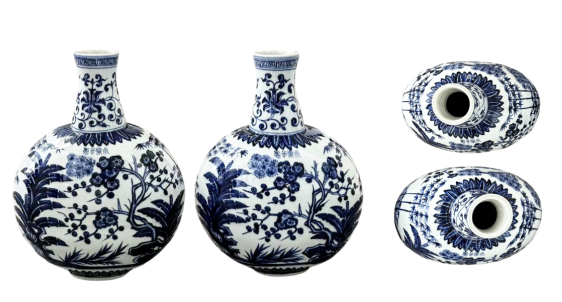
赏瓶,亦称 “玉堂春瓶”,最早出现于清代雍正时期,本为皇帝赏赐重臣的礼器,因谐音 “赏瓶” 而得名。其制式多为撇口、长颈、圆腹、圈足,线条流畅圆润,器型端庄大气,既具陈设之美,又含礼赠之意。历经数百年演变,赏瓶逐渐从宫廷走向民间,成为文人书房中不可或缺的陈设瓷,承载着主人的志趣与品格。这对赏瓶的造型,便恪守了赏瓶的经典制式,瓶身饱满挺拔,线条从口沿至腹部缓缓舒展,至圈足处稳稳收束,宛如一位身姿挺拔、气度雍容的君子,自带一份从容不迫的端庄。
Appreciation vases, also known as "Yutangchun vases", first appeared during the Yongzheng period of the Qing Dynasty. Originally ritual vessels used by the emperor to reward important officials, they got their name from the homophony of "reward". They typically feature a flared mouth, long neck, round belly, and ring foot, with smooth, rounded lines and a dignified, grand shape, combining the beauty of display with the meaning of gift-giving. Over hundreds of years of evolution, appreciation vases gradually spread from the court to the folk, becoming indispensable decorative porcelain in literati studies, carrying the owner's interests and character. The shape of this pair of vases adheres to the classic appreciation vase form: the body is plump and upright, with lines gently stretching from the rim to the belly and steadily converging at the foot, resembling a tall, elegant gentleman with an unhurried dignity.
瓶身通体以青花为饰,釉色莹润,白釉如玉,青花如黛,蓝白相映,层次分明。这种以钴料为呈色剂,在瓷胎上绘画,再罩上透明釉,经高温一次烧成的釉下彩工艺,自唐代萌芽,元代成熟,明清时期更是达到了艺术巅峰。这对赏瓶的青花发色浓淡相宜,浓处苍翠如墨,淡处清雅如水,笔触间可见浓淡干湿的变化,既有工笔的细腻,又有写意的洒脱,尽显传统水墨的笔墨意趣。
The entire body of the vase is decorated with blue and white, with glossy glaze, jade-like white glaze, and indigo-like blue and white, creating a distinct contrast between blue and white. This underglaze color technique, which uses cobalt as the colorant to paint on the porcelain body, then covers it with transparent glaze and fires it once at high temperature, originated in the Tang Dynasty, matured in the Yuan Dynasty, and reached its artistic peak in the Ming and Qing dynasties. The blue and white color of this pair of vases is balanced in depth: the dark parts are as green as ink, the light parts as elegant as water, and the brushstrokes show changes in density and dryness, combining the delicacy of fine brushwork with the freedom of freehand brushwork, fully reflecting the charm of traditional ink painting.
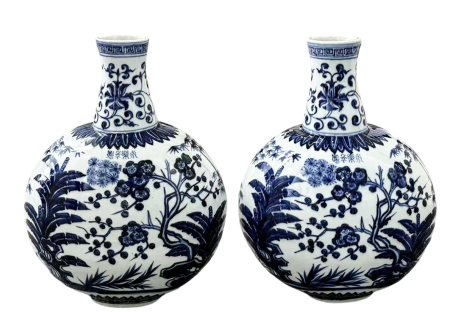
最引人注目的,莫过于瓶身所绘的 “岁寒三友” 纹饰。松、竹、梅,是中国传统文化中象征君子品格的经典意象。松,四季常青,象征坚韧不屈;竹,中空有节,象征谦逊高洁;梅,傲雪迎春,象征傲骨不屈。这三种植物,都能在寒冬中傲然挺立,不畏风霜,故而被合称为 “岁寒三友”,成为文人笔下表达高洁品格的永恒主题。瓶上的纹饰,将这三种植物巧妙地融为一体:苍松虬枝盘曲,针叶如簇,尽显苍劲风骨;翠竹挺拔修长,竹叶如刀,带着一份疏朗之气;寒梅疏影横斜,暗香浮动,传递出凌寒独自开的孤高。三者相互掩映,疏密有致,既展现了自然之美,又暗含了文人的精神追求。
The most eye-catching feature is the "Three Friends of Winter" pattern painted on the vase body. Pine, bamboo, and plum blossom are classic symbols of gentlemanly character in traditional Chinese culture. The pine, evergreen throughout the year, symbolizes resilience; the bamboo, hollow with nodes, symbolizes modesty and purity; the plum blossom, blooming in the snow to welcome spring, symbolizes unyielding pride. These three plants, which stand proudly in the cold winter and defy wind and frost, are collectively called the "Three Friends of Winter", becoming an eternal theme for literati to express noble character. The pattern on the vase cleverly integrates the three plants: the gnarled pine branches twist and turn, with pine needles like clusters, showing vigorous character; the slender green bamboo stands tall, with leaves like knives, exuding a sense of openness; the cold plum blossoms have sparse shadows, conveying the solitude of blooming alone in the cold. The three complement each other, with a well-balanced arrangement, showing the beauty of nature while implying the spiritual pursuit of literati.
在纹饰的细节处理上,这对赏瓶更是尽显匠心。松枝的苍劲、竹节的挺拔、梅枝的虬曲,都以细腻的笔触勾勒而出,青花的浓淡变化,更赋予了画面以层次感与立体感。枝干的转折、叶片的向背、花瓣的开合,都刻画得一丝不苟,仿佛能让人感受到松针的坚硬、竹叶的柔韧、梅花的娇美。尤其是瓶身的留白处,更给人以想象的空间,蓝白之间,虚实相生,既有图案的装饰性,又有绘画的艺术性,将传统文人画的审美意趣完美地融入了瓷器装饰之中。
In the detailed handling of the patterns, this pair of vases fully demonstrates exquisite craftsmanship. The ruggedness of the pine branches, the uprightness of the bamboo nodes, and the twists of the plum branches are all outlined with delicate brushstrokes, and the changes in the shade of blue and white give the picture a sense of layering and three-dimensionality. The turns of the branches, the orientation of the leaves, and the opening and closing of the petals are all meticulously depicted, as if one can feel the hardness of the pine needles, the flexibility of the bamboo leaves, and the delicacy of the plum blossoms. Especially the blank spaces on the vase body leave room for imagination. Between blue and white, reality and illusion coexist, combining the decorative nature of patterns with the artistry of painting, perfectly integrating the aesthetic interest of traditional literati painting into porcelain decoration.
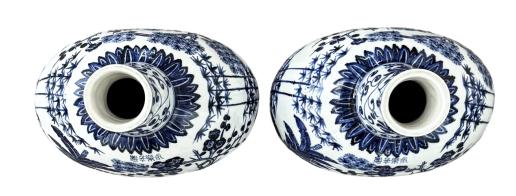
这对青花岁寒三友赏瓶,不仅是一件精美的瓷器,更是中国传统文化的载体。它承载着文人对君子品格的推崇,也寄托了人们对高洁情操的向往。在蓝白交织的纹饰中,我们看到的不仅是松竹梅的自然之美,更是中国人独有的精神气节。松的坚韧、竹的谦逊、梅的傲骨,早已融入了中国人的文化血脉,成为我们民族精神的重要组成部分。而这对赏瓶,正是这种精神的物化体现,它以瓷器为纸,以青花为墨,书写着千年不变的君子风骨。
This pair of blue and white appreciation vases with the Three Friends of Winter pattern is not only an exquisite piece of porcelain but also a carrier of traditional Chinese culture. It carries the literati's admiration for gentlemanly character and people's yearning for noble sentiments. In the interwoven blue and white patterns, we see not only the natural beauty of pine, bamboo, and plum blossom but also the unique spiritual integrity of the Chinese people. The resilience of pine, the modesty of bamboo, and the pride of plum blossom have long been integrated into the cultural blood of the Chinese people, becoming an important part of our national spirit. And this pair of vases is the material embodiment of this spirit: using porcelain as paper and blue and white as ink, they write the unchanging gentlemanly integrity of a thousand years.
历经岁月的洗礼,这对赏瓶依然完好如初,釉色温润,纹饰清晰,仿佛时光从未在它身上留下痕迹。它静静地立在那里,以一种沉默的姿态,向我们诉说着传统工艺的精湛与文化传承的力量。在快节奏的现代生活中,这样一件器物,更像是一股清流,让我们得以在喧嚣中沉静下来,感受那份来自千年之前的从容与雅致,读懂藏在蓝白之间的君子风骨与文化底蕴。
After years of baptism, this pair of vases remains intact, with glossy glaze and clear patterns, as if time has never left a trace on them. Standing quietly there, they silently tell us the exquisite craftsmanship of traditional techniques and the power of cultural inheritance. In the fast-paced modern life, such an object is like a clear stream, allowing us to calm down in the hustle and bustle, feel the calm and elegance from a thousand years ago, and understand the gentlemanly integrity and cultural heritage hidden between blue and white.
清代宫廷风格豇豆红釉苹果尊在清代康熙朝的御窑瓷器谱系中,豇豆红釉苹果尊无疑是最具代表性的宫廷雅器之一,它以温润如脂的釉色、精巧灵动的器型...
郎窑红釉天球瓶 霁蓝釉暗刻留白龙纹梅瓶 清代宫廷风格豇豆红釉苹果尊 青花岁寒三友赏瓶

Copyright © 2002-2018 中国母婴网 版权所有 备案号:
站点声明:本网内容为转载,为广告,相关素材由广告主提供,广告主对本广告内容的真实性负责。
本网发布目的在于传递更多信息,并不代表本网赞同其观点和对其真实性负责,转载内容仅供读者参考。
如有站点名称冲突,侵权等请联系我们删除,请您监督!