时间:2026-06-03来源:网络作者:admin


在清代康熙朝的御窑瓷器谱系中,豇豆红釉苹果尊无疑是最具代表性的宫廷雅器之一,它以温润如脂的釉色、精巧灵动的器型,成为中国高温铜红釉瓷器史上的巅峰之作,承载着清代宫廷的审美意趣与制瓷工艺的最高水准。豇豆红釉是康熙时期创烧的名贵高温铜红釉品种,因釉色红中泛粉、如豇豆成熟时的色泽而得名,又因釉面常浮现天然的苔点绿晕,被文人雅士赋予 “美人醉”“桃花片”“娃娃脸” 等雅称,其烧造难度极高,成品率极低,仅在康熙朝短暂烧造,专供皇室御用,民间几乎无流传,是名副其实的 “官窑中的官窑”。而苹果尊作为豇豆红釉的经典器型,以其圆润饱满的造型、浑然天成的釉色,成为后世藏家梦寐以求的珍品,这件豇豆红釉苹果尊,正是清代宫廷风格瓷器的典范之作。
Among the imperial porcelain lineage of the Kangxi period in the Qing Dynasty, the cowpea red glaze apple-shaped zun vase is undoubtedly one of the most representative court elegant wares. With its warm and jade-like glaze color and exquisite and vivid shape, it stands as a pinnacle work in the history of Chinese high-temperature copper red glaze porcelain, embodying the aesthetic taste of the Qing Dynasty court and the highest level of porcelain-making craftsmanship. Cowpea red glaze is a precious high-temperature copper red glaze variety created during the Kangxi reign. Named for its pinkish-red hue, reminiscent of the color of ripe cowpeas, it is also endowed with elegant names such as "Beauty's Drunkenness", "Peach Blossom Slice", and "Baby's Face" by literati and scholars, thanks to the natural moss-like green halos often visible on the glaze surface. Its firing is extremely difficult with a very low yield, and it was only briefly produced during the Kangxi reign, exclusively for imperial use, with almost no circulation among the public, making it a veritable "imperial kiln among imperial kilns". As a classic shape for cowpea red glaze, the apple-shaped zun vase, with its plump and rounded form and natural glaze color, has become a treasure coveted by collectors of later generations. This cowpea red glaze apple-shaped zun vase is a model of Qing Dynasty court-style porcelain.
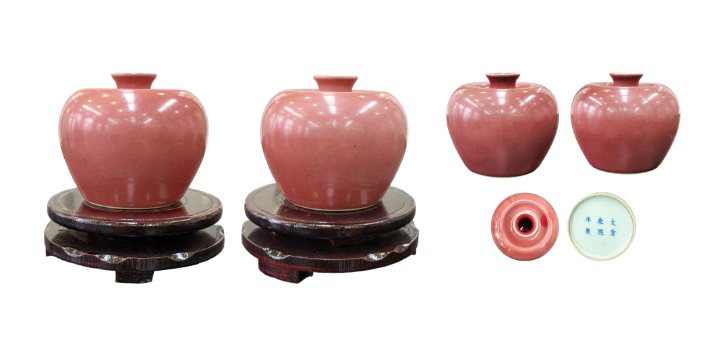
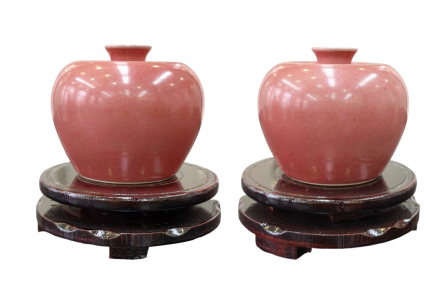
从器型来看,这件苹果尊完美诠释了清代宫廷 “尚圆尚满” 的审美追求,整体造型饱满圆润,线条流畅柔和,无丝毫生硬之感。器身呈苹果状,丰肩鼓腹,腹身向下缓缓收敛,圈足规整,口部小巧内敛,呈撇口状,颈部短而圆润,整体比例协调,重心沉稳,既符合实用功能,又极具视觉美感。这种器型设计源自康熙时期对自然物象的提炼,以苹果为造型原型,既取 “平安” 的吉祥寓意,契合宫廷对福寿安康的祈愿,又以圆润的线条彰显皇家雍容大气的气度。与明代瓷器的雄浑厚重不同,康熙朝御窑瓷器在造型上更注重精巧与灵动,这件苹果尊的尺寸虽小巧,却在细节处尽显匠心:口沿处的白釉边整齐利落,圈足修胎规整细腻,胎体厚薄均匀,体现了清代御窑制胎工艺的极致水准,每一处线条都经过反复打磨,既符合宫廷严格的制式要求,又融入了工匠的巧思,让器物在静态中蕴含着灵动之美。
In terms of shape, this apple-shaped zun vase perfectly interprets the Qing Dynasty court's aesthetic pursuit of "roundness and fullness". The overall shape is plump and rounded, with smooth and gentle lines and no stiffness at all. The body is apple-shaped, with a plump shoulder and bulging belly, which gradually tapers downward, with a neat ring foot. The mouth is small and introverted, flared, with a short and rounded neck. The overall proportion is coordinated, and the center of gravity is stable, which not only meets practical functions but also has extremely high visual beauty. This shape design is derived from the refinement of natural objects in the Kangxi period, taking the apple as the prototype. It not only takes the auspicious meaning of "peace", which is in line with the court's prayer for longevity, health and peace, but also shows the royal grace and grandeur with smooth lines. Different from the vigorous and heavy porcelain of the Ming Dynasty, the imperial kiln porcelain of the Kangxi reign paid more attention to exquisiteness and agility in shape. Although the size of this apple-shaped zun vase is small, it shows ingenuity in every detail: the white glaze edge at the mouth is neat, the ring foot is trimmed neatly and delicately, and the tire body is of uniform thickness, reflecting the ultimate level of the Qing Dynasty imperial kiln tire-making craftsmanship. Every line has been repeatedly polished, which not only meets the strict system requirements of the court but also integrates the craftsmen's ingenuity, making the vessel contain agile beauty in a static state.
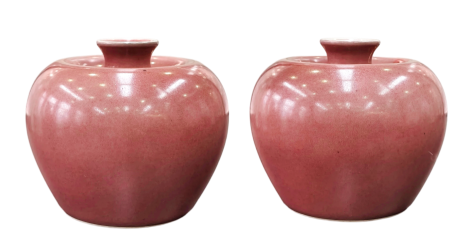
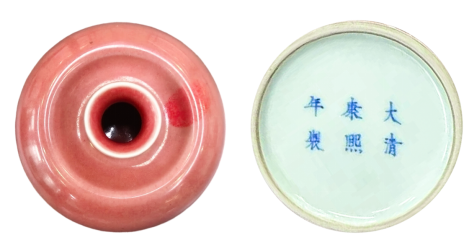
釉色是豇豆红釉苹果尊的灵魂所在,这件器物的釉色完美呈现了豇豆红釉的经典特质:整体釉色呈温润的粉红色,如桃花初绽、似美人醉颜,釉面匀净莹润,光泽柔和内敛,无刺眼的浮光,尽显皇家瓷器的含蓄之美。在整体的粉红釉色中,自然浮现出深浅不一的红韵与若隐若现的苔点绿晕,这是高温铜红釉在窑变中形成的天然效果,也是豇豆红釉最珍贵的特征之一,每一件器物的窑变效果都独一无二,不可复制。从器物顶部的细节可见,口沿内侧的釉色过渡自然,局部出现的浓艳红韵,正是豇豆红釉 “满身红” 的优质表现,而口沿处的 “灯草边” 白釉整齐规整,是康熙豇豆红釉的典型特征,既起到了装饰作用,又彰显了制瓷工艺的严谨。豇豆红釉的烧造对窑温、气氛、釉料配比的要求近乎苛刻,稍有偏差便会出现釉色发黑、发灰、流釉等问题,因此康熙朝的豇豆红釉瓷器多为文房雅器,如苹果尊、柳叶瓶、太白尊等,专供皇帝赏玩,这件苹果尊的釉色匀净、窑变自然,无疑是其中的精品,凝聚了御窑工匠的毕生心血,是清代宫廷制瓷工艺巅峰的生动见证。
The glaze color is the soul of the cowpea red glaze apple-shaped zun vase. The glaze color of this vessel perfectly presents the classic characteristics of cowpea red glaze: the overall glaze color is a warm pink, like peach blossoms in early bloom and a beauty's drunken face. The glaze surface is even, smooth and moist, with soft and introverted luster, no dazzling floating light, fully showing the implicit beauty of royal porcelain. In the overall pink glaze color, there are naturally varying shades of red rhyme and faint moss-like green halos, which are natural effects formed by high-temperature copper red glaze during kiln transformation, and also one of the most precious characteristics of cowpea red glaze. The kiln transformation effect of each vessel is unique and irreproducible. From the details at the top of the vessel, the glaze color transition inside the mouth is natural, and the intense red rhyme appearing locally is the high-quality performance of cowpea red glaze's "full body red". The neat "rush edge" white glaze at the mouth is a typical feature of Kangxi cowpea red glaze, which not only plays a decorative role but also highlights the rigor of porcelain-making craftsmanship. The firing of cowpea red glaze has almost harsh requirements on kiln temperature, atmosphere and glaze ratio. A slight deviation will cause problems such as dark glaze, gray glaze and glaze running. Therefore, the cowpea red glaze porcelain of the Kangxi reign is mostly elegant stationery, such as apple-shaped zun vase, willow leaf bottle, Taibai zun vase, etc., exclusively for the emperor's appreciation. The even glaze color and natural kiln transformation of this apple-shaped zun vase are undoubtedly a fine product among them, condensing the lifelong efforts of imperial kiln craftsmen, and is a vivid witness to the peak of Qing Dynasty court porcelain-making craftsmanship.
器物底部的款识是其宫廷身份的直接佐证,这件苹果尊底部书 “大清康熙年制” 六字青花楷书款,字体工整秀丽,笔力遒劲,青花发色浓艳明快,是典型的康熙官窑款识风格。康熙朝官窑款识有着严格的书写规范,由宫廷指定的书手专门书写,字体结构严谨,笔画刚劲有力,无丝毫潦草之处,这件器物的款识完全符合康熙官窑款的特征,印证了其御窑烧造、宫廷御用的身份。在清代,御窑瓷器的款识是皇权的象征,只有经皇帝钦准、符合宫廷制式的器物才能落官窑款,民间私造官窑款属于重罪,因此这件款识规整的苹果尊,是其清代宫廷风格的核心凭证,也为器物的断代与定级提供了重要依据。同时,底部的白釉莹润洁白,胎质细腻坚致,体现了康熙朝 “糯米胎” 的典型特征,胎体坚致细密,釉面与胎体结合紧密,无脱釉、漏釉现象,尽显御窑瓷器的品质。
The mark at the bottom of the vessel is direct evidence of its court status. At the bottom of this apple-shaped zun vase is inscribed the six-character blue and white regular script mark "Made in the Kangxi Year of the Great Qing Dynasty". The font is neat and beautiful, with powerful strokes, and the blue and white color is rich and bright, which is a typical Kangxi imperial kiln mark style. The imperial kiln marks of the Kangxi reign had strict writing norms, specially written by court-appointed calligraphers. The font structure is rigorous, the strokes are strong, and there is no carelessness at all. The mark of this vessel fully conforms to the characteristics of the Kangxi imperial kiln mark, confirming its identity as an imperial kiln-fired and court-used vessel. In the Qing Dynasty, the mark of imperial kiln porcelain was a symbol of imperial power. Only vessels approved by the emperor and conforming to court standards could bear imperial kiln marks, and private forging of imperial kiln marks among the people was a felony. Therefore, this apple-shaped zun vase with a neat mark is the core proof of its Qing Dynasty court style, and also provides an important basis for the dating and grading of the vessel. At the same time, the white glaze at the bottom is bright and white, and the tire quality is delicate and firm, reflecting the typical characteristics of "glutinous rice tire" in the Kangxi reign. The tire body is firm and dense, and the glaze surface is closely combined with the tire body, without glaze peeling or leakage, fully showing the quality of imperial kiln porcelain.
豇豆红釉苹果尊不仅是一件瓷器,更是清代宫廷文化与审美情趣的载体。康熙朝是清代瓷器发展的黄金时期,御窑厂在继承明代制瓷工艺的基础上,不断创新突破,豇豆红釉便是这一时期创新的杰出代表,它融合了高温铜红釉的烧造难度与文人审美的雅致情趣,既满足了皇家对名贵瓷器的追求,又契合了文人士大夫的审美偏好。苹果尊的器型小巧精致,最初作为文房水盂使用,用于砚台添水,是皇帝书房中的雅器,承载着帝王的文人情思,其圆润的造型、温润的釉色,与书房的清雅氛围相得益彰,体现了清代宫廷 “文治” 的治国理念与崇文尚雅的文化风尚。在清代宫廷,豇豆红釉瓷器被视为珍宝,仅用于皇帝赏玩、宫廷陈设与赏赐,极少流入民间,因此存世量极为稀少,这件保存完整、釉色精美的苹果尊,更是凤毛麟角的珍品,具有极高的历史价值、艺术价值与收藏价值。
The cowpea red glaze apple-shaped zun vase is not only a piece of porcelain, but also a carrier of Qing Dynasty court culture and aesthetic taste. The Kangxi reign was the golden age of Qing Dynasty porcelain development. On the basis of inheriting the porcelain-making craftsmanship of the Ming Dynasty, the imperial kiln continued to innovate and break through. Cowpea red glaze is an outstanding representative of innovation in this period. It combines the firing difficulty of high-temperature copper red glaze with the elegant taste of literati aesthetics, which not only meets the royal pursuit of precious porcelain but also conforms to the aesthetic preference of literati and scholars. The shape of the apple-shaped zun vase is small and exquisite, originally used as a study water pot for adding water to inkstones. It is an elegant vessel in the emperor's study, carrying the emperor's literati feelings. Its rounded shape and warm glaze color complement the elegant atmosphere of the study, reflecting the Qing Dynasty court's governance concept of "civil governance" and the cultural fashion of advocating culture and elegance. In the Qing Dynasty court, cowpea red glaze porcelain was regarded as a treasure, only used for the emperor's appreciation, court display and rewards, rarely flowing into the folk. Therefore, the number of surviving pieces is extremely rare. This well-preserved apple-shaped zun vase with exquisite glaze color is an extremely rare treasure, with extremely high historical, artistic and collection value.
时至今日,这件清代宫廷风格的豇豆红釉苹果尊,依然以其温润的釉色、精巧的造型,向世人展现着清代御窑瓷器的非凡魅力。它不仅是中国古代制瓷工艺的巅峰之作,更是清代宫廷文化的鲜活见证,承载着一个时代的审美与匠心。每一次凝视这件器物,都能感受到康熙朝御窑工匠的极致追求,感受到清代宫廷的雍容气度与雅致情怀,它是连接古今的文化纽带,是中国陶瓷史上不可逾越的经典,永远闪耀着不朽的艺术光芒。
Today, this cowpea red glaze apple-shaped zun vase in Qing Dynasty court style still shows the extraordinary charm of Qing Dynasty imperial kiln porcelain to the world with its warm glaze color and exquisite shape. It is not only a pinnacle work of ancient Chinese porcelain-making craftsmanship, but also a vivid witness of Qing Dynasty court culture, carrying the aesthetics and ingenuity of an era. Every time we gaze at this vessel, we can feel the ultimate pursuit of the imperial kiln craftsmen in the Kangxi reign, and the graceful bearing and elegant feelings of the Qing Dynasty court. It is a cultural link connecting ancient and modern times, an insurmountable classic in the history of Chinese ceramics, and will always shine with immortal artistic light.
耀州窑婴戏纹碗在中国陶瓷史上,耀州窑以其 “巧如范金,精比琢玉” 的刻花青瓷独树一帜,而这件宋代耀州窑婴戏纹碗,更是将北方青瓷...
清代宫廷风格豇豆红釉苹果尊 四川省造光绪元宝 耀州窑婴戏纹碗 珐琅彩描金四臂观音双耳瓶:瓷中佛韵的皇家

Copyright © 2002-2018 中国母婴网 版权所有 备案号:
站点声明:本网内容为转载,为广告,相关素材由广告主提供,广告主对本广告内容的真实性负责。
本网发布目的在于传递更多信息,并不代表本网赞同其观点和对其真实性负责,转载内容仅供读者参考。
如有站点名称冲突,侵权等请联系我们删除,请您监督!