时间:2026-07-21来源:网络作者:adminf


Premium Recommendation — Ten Thousand Yuan Note with Double Horses Ploughing Motif

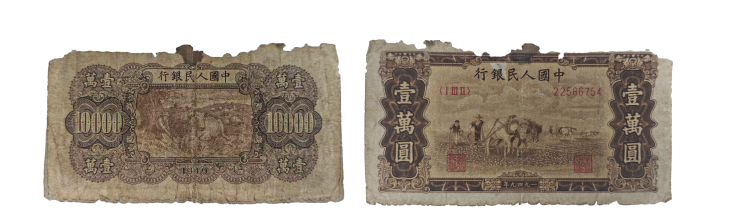
*本次藏品:双马耕地一万元*
典藏尺寸:长:14cm 宽:7cm
人民币承载着新中国从百废待兴到蓬勃发展的时代记忆,而诞生于建国之初的第一套人民币,更是近代红色货币收藏领域无可替代的标杆品类。不同于后世纸币规整统一的设计风格,第一套人民币诞生于建国初期物资匮乏、战事未完全平息的特殊年代,票面图景扎根工农生活,每一张纸币都是记录建国初期社会风貌、经济建设、民生百态的鲜活实物史料——第一套人民币壹万元 “双马耕地” 券,票面完整保留经典农耕主题画面,制式要素齐全,实测长 14cm、宽 7cm,完全契合原版官方印制规格,历经七十余年岁月留存至今,兼具红色历史研究价值、人文艺术审美价值与长期稳定的收藏升值潜力,是第一套人民币系列中极具代表性的经典名品。
1948 年解放战争走向全面胜利,全国各解放区货币体系繁杂、币种互不流通,边区票、地方兑换券种类繁多,严重阻碍跨区域物资贸易与民生流通。为统一全国金融秩序、稳定解放区物价、建立属于人民的独立货币体系,1948 年 12 月 1 日,中国人民银行在河北石家庄正式成立,同步发行新中国第一套法定人民币,彻底终结近代以来外币、地方杂钞割据流通的混乱局面。
第一套人民币发行周期横跨 1948 至 1953 年,全套共计 12 种面额、62 个版别,壹万元作为当时大面值币种,专为建国初期大额物资交易、农业生产结算、城乡商贸流通设计。彼时新中国刚刚成立,历经多年战乱,农业生产百废待兴,全国经济建设以恢复农耕、发展农业为核心国策,农民是国家建设的根基力量。在此时代基调之下,“双马耕地” 壹万元券应运而生,票面以农田耕作场景为核心视觉,将农耕劳作、劳动人民形象印刻于国家法定货币之上,直观传递新中国以农为本、尊重劳动、依靠工农建设国家的核心思想。
受限于建国初期薄弱的工业基础,这套纸币没有现代化专业印钞设备,多采用老旧凹版印刷机、就地取材的棉麻纸张手工印制,油墨、纸张原料供应短缺,且全国多处分厂同步生产,印制条件简陋。加之建国初期城乡流通量巨大,纸币常年在市井、乡村反复流转,后续 1955 年国家推行币制改革,正式回收全部第一套人民币并停止流通,大量旧钞被集中收缴销毁。短短数年回收销毁,再加上七十余年流转损耗、虫蛀霉变、人为遗失,完整留存下来的第一套人民币存世量急剧缩减,其中品相完好、票面图景清晰的壹万元双马耕地券更是愈发稀缺,在红色纸币收藏圈始终稳居热门藏品行列。
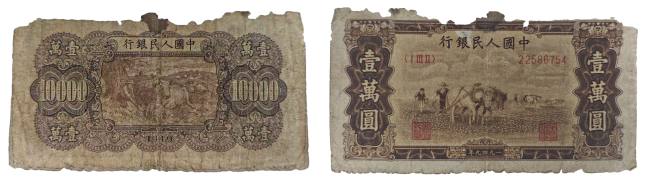
本次典藏的壹万元双马耕地券尺寸标准规范,长 14 厘米、宽 7 厘米,与原版官方制版规格完全吻合,正反面设计各司其职,构图饱满、细节丰富,将建国初年北方乡村农耕日常完整定格在方寸纸币之上,红藏价值与美术价值兼备。
正面(主图景:双马耕地劳作图)
纸币正面是全券核心看点,画面中央铺展开阔田野,两位农民立于田间,牵引两匹骏马拉动耕犁翻整土地,远处延伸出连绵田垄,远景点缀平缓山丘,完整还原北方春耕劳作的经典画面。人物姿态写实质朴,农夫头戴斗笠、俯身扶犁,马匹体态健硕,肌肉、鬃毛纹理通过精细凹版线条层层刻画,即便历经岁月磨损,双马、耕犁、农夫的主体轮廓依旧清晰可辨。 画面两侧竖立篆书大字 “壹萬圓”,字体古朴厚重,搭配多层雕花防伪边框,繁复卷曲的花纹环绕票面四周,线条细密交错,是建国初期经典的手工雕版防伪工艺;票面顶端横排繁体行名 “中國人民銀行”,红色阿拉伯数字冠号与流水编号印于票面右上方,两方红色防伪印章分列图景底部左右,分别为行长、副行长印章,是第一套人民币统一制式标识。整体色调以棕褐色为主,油墨色彩温润复古,自带年代沉淀的泛黄旧意,没有人工漂白、重彩修复的痕迹,原生老旧状态完整保留。
背面(主图景:万圆数字与农牧纹饰)
纸币背面简化设计,左右两侧对称刻印大号阿拉伯数字 “10000”,搭配环绕式麦穗、马匹浮雕纹饰,呼应正面农耕主题,上下边角辅以篆书 “壹萬” 小字,与正面面值文字形成呼应;底部标注原版印制年份 1949 年,边框延续正面多层缠枝雕花,全套纹饰雕刻风格统一。背面整体配色偏暗紫褐,纸张棉麻肌理清晰可见,能直观感受早期印钞专用棉纸粗糙厚实的原始质感,区别于后期光滑机制印钞纸。
整券纸张布满自然岁月痕迹,边缘存在自然损耗、轻微缺角,是长期民间流通形成的原生品相,无裁切修补、无拼接后填、无化学药水清洗做旧。老藏家收藏第一套人民币历来推崇 “原票原味”,人工清洗、修补会不可逆破坏原版雕版线条与棉纸基底,大幅削减藏品价值,而此枚藏品保留原始流通旧貌,票面核心劳作图景、行名、面值、冠号、印章要素全部完整可辨,属于具备收藏门槛的流通旧品,兼顾观赏与史料研究双重属性。
Renminbi carries the collective memory of New China’s journey from post-war devastation to vigorous prosperity. The First Series Renminbi, launched at the founding of the People’s Republic, stands as an irreplaceable benchmark in the field of modern red currency collecting. Unlike later banknotes with standardized, unified design aesthetics, the First Series RMB was produced amid a special era marked by material shortages and lingering warfare in the early years of New China. Its designs draw inspiration from the lives of workers and peasants, with every banknote serving as vivid physical archival material documenting the social landscape, economic reconstruction and people’s livelihoods of the fledgling republic. Among these notes is the 10,000-yuan “Double Horses Ploughing” banknote, which fully preserves its classic farming-themed artwork with all standard design elements intact. The specimen measures 14 cm in length and 7 cm in width, strictly conforming to the official original printing specifications. Having survived more than seven decades, it boasts profound red historical research value, unique humanistic artistic appeal, and steady long-term appreciation potential, ranking as one of the most iconic masterpieces within the First Series RMB collection.
By 1948, the Liberation War was sweeping toward total victory. Currency systems across all liberated regions remained fragmented, with regional border notes and local exchange vouchers circulating independently, severely hindering cross-regional commodity trade and civilian transactions. To unify the national financial order, stabilize prices in liberated zones, and establish an independent people’s monetary system, the People’s Bank of China was formally founded in Shijiazhuang, Hebei Province, on December 1, 1948. It simultaneously issued New China’s first legal tender, putting an end to the chaotic circulation of foreign currencies and miscellaneous local banknotes that had prevailed in modern Chinese history.
Issued between 1948 and 1953, the First Series RMB covers 12 denominations with a total of 62 distinct varieties. As a high-denomination note for its time, the 10,000-yuan variant was engineered to facilitate large-volume commodity transactions, agricultural production settlements, and urban-rural commercial exchanges in early New China. The country had just emerged from years of warfare, leaving its agricultural sector in ruins. Restoring farming and developing agriculture stood as the core national economic policy, with farmers forming the foundational force of national reconstruction. Against this historical backdrop, the “Double Horses Ploughing” 10,000-yuan banknote came into being. Its central design depicts farmland cultivation, imprinting scenes of agrarian labor and working people onto the nation’s legal tender, intuitively embodying New China’s core philosophy of prioritizing agriculture, respecting labor, and building the nation relying on workers and peasants.
Constrained by the underdeveloped industrial foundation of early New China, modern specialized banknote printing equipment was unavailable. These notes were hand-printed on locally sourced linen-cotton paper using outdated intaglio presses, with chronic shortages of ink and paper raw materials. Multiple branch mints across the country operated simultaneously under primitive production conditions. Furthermore, the banknotes circulated widely across cities and villages for years. In 1955, the state launched a currency reform, officially recalling all First Series RMB and suspending its circulation, with massive volumes of old notes confiscated and incinerated. The mass destruction over just a few decades, compounded by seventy years of circulation wear, moth damage, mildew and accidental loss, has drastically reduced surviving examples of the First Series RMB. Specimens of the 10,000-yuan Double Horses Ploughing note with intact surfaces and clear artwork have grown increasingly scarce, consistently ranking as a highly sought-after collectible within the red banknote collecting community.
This collected 10,000-yuan Double Horses Ploughing banknote adheres strictly to the official original plate dimensions of 14 centimeters long and 7 centimeters wide. Its obverse and reverse feature complementary designs with rich, well-composed details, freezing the rural farming scenes of northern China in the early founding years on a small slip of paper, combining outstanding red collection value and artistic merit.
Obverse: Central Motif – Two Horses Ploughing the Fields
The obverse constitutes the highlight of the entire note. At its center lies a vast stretch of farmland, where two farmers stand guiding two sturdy horses pulling a plough to turn over the soil. Endless furrows stretch into the distance, framed by rolling low hills on the horizon, faithfully recreating a classic northern spring ploughing scene. The farmers are rendered in realistic, understated poses: wearing bamboo hats, bending forward to steady the plough. The horses possess robust physiques, with finely layered intaglio lines carving the texture of their muscles and manes. Even after decades of wear, the core outlines of the horses, plough and farmers remain sharply distinguishable. Vertical seal script characters “Ten Thousand Yuan” frame the scene on both sides, bold and time-honored in style, encased within multi-layered carved anti-counterfeit borders. Intricate curling decorative patterns wind around the entire note face with densely interwoven lines, representing classic hand-engraved anti-counterfeit craftsmanship of early New China. Across the top edge runs the traditional Chinese horizontal inscription “People’s Bank of China”. Red Arabic serial numbers and prefix codes are printed in the upper right of the frame, while two red official security seals sit at the bottom left and right of the illustration, bearing the signatures of the Bank Governor and Deputy Governor respectively — standardized identifying marks of all First Series RMB notes. The overall palette leans warm sepia-brown, with mellow, vintage ink tones and natural yellowing accumulated over time. No artificial bleaching or color retouching has been applied, fully preserving the note’s original aged patina.
Reverse: Central Motif – Numeral “10000” and Farming & Livestock Ornamentation
The reverse features a streamlined layout, flanked by large symmetrical Arabic numerals “10000” encircled by embossed wheat sheaf and horse motifs that echo the farming theme of the obverse. Small seal script characters “Ten Thousand Yuan” decorate the four corners, echoing the denomination text on the front. The original printing year “1949” is marked along the bottom edge, and the border retains the same multi-layered scrolling carved patterns as the obverse, maintaining unified engraving aesthetics across both sides. The reverse carries a dark purplish-brown color scheme, and the coarse, thick woven texture of the early dedicated banknote linen-cotton paper is clearly visible, distinctly different from the smooth machine-produced paper used in later currency series.
The entire note bears natural signs of time, with minor fraying and small edge chips formed through long-term civilian circulation, representing its authentic circulated state. There is no trimming, patching, fill-in repair, or artificial aging via chemical solvents. Veteran collectors of the First Series RMB universally uphold the principle of “original note, untouched patina”: artificial cleaning or restoration inflicts irreversible damage to the original engraved lines and cotton-linen paper substrate, drastically devaluing the banknote. This specimen retains its unaltered circulated appearance, with all core elements — farming artwork, bank name, denomination, serial number and official seals — fully legible. It is a qualified circulated collectible with dual value for aesthetic appreciation and historical research.
*本次藏品:双马耕地一万元*
典藏尺寸:长:14cm 宽:7cm
独一无二的红色历史史料价值
壹万元双马耕地券是研究建国初期经济、农业、金融史的一手实物凭证。 其一,货币层面:它见证我国第一次货币统一改革,清晰反映 1948—1955 年建国初期大额货币流通体系,完整还原旧币万元面值与 1955 年新币兑换的币制改革全过程; 其二,农业层面:票面双马耕田图景,直观记录上世纪 50 年代北方传统畜耕农业模式,是研究建国农耕文化、乡村生产风貌不可多得的图像史料; 其三,红色金融层面,票面 “中国人民银行” 行名、工农主题设计、解放区手工雕版印刷工艺,完整呈现新中国红色印钞工业起步阶段的技术特征,各大钱币博物馆、红色文史展馆长期征集第一套人民币原版实物,持续的学术研究需求,牢牢稳住这类藏品的底层收藏价值。
不同于书本文字史料,纸币是当时全民日常使用的法定货币,承载着真实的民生记忆,小小一张钞票,串联起解放战争收尾、新中国成立、农业恢复、币制改革完整历史脉络,历史不可复刻,原版流通旧钞存量逐年递减,史料稀缺性持续上涨。
独具时代印记的人文艺术审美价值
第一套人民币全部图案由老一辈专业雕版手工刻画,无电脑辅助制版,每一处线条都蕴含手工雕刻独有的温度与质感,双马耕地是工农题材纸币的经典设计范本。 画面摒弃华丽繁复的宫廷美学,扎根底层劳动人民真实生活,构图写实朴素,充满浓厚的乡土烟火气息,双马、农夫、田野组合传递勤劳耕作、自力更生的时代精神,是建国初年现实主义美术的缩影。手工凹版雕刻线条层次丰富,马匹毛发、田垄泥土、服饰褶皱均通过疏密不同的线条区分明暗,这种传统雕版技艺在现代印钞体系中已极少使用,具备独特美术收藏意义。 历经七十余年氧化泛黄形成的自然旧色,每一张原票纹理、褪色程度都独一无二,无法人工复刻。放置文房展柜陈列,复古棕褐色票面自带厚重红色年代氛围感,是文玩收藏、红色主题陈设的优选藏品,观赏价值突出。
长期稳定增值的市场流通收藏价值
近些年来红色纸币收藏赛道热度持续走高,第一套人民币作为人民币收藏的 “开山鼻祖”,长期占据市场核心地位,受众覆盖入门纸币爱好者、资深专业藏家、红色主题投资者,变现渠道广阔。 市场行情呈现清晰分层走势:严重破损、大面积缺图、清洗修补的残次品价格浮动微弱;而要素齐全、原图完整、无人工修复的原生原票,价格长期稳步上涨。壹万元双马耕地作为一版币主流大面值品种,入手门槛适中,相比一版币稀缺珍品更易收藏,同时题材大众接受度高,农耕红色主题自带文化 buff,受众群体庞大。 随着时间推移,民间留存原版旧钞不断消耗,老藏家惜售不出,市场流通的完整原票逐年减少,稀缺性稳步提升。对比瓷器、玉器等大宗藏品,纸币藏品占地小、保存便捷、文化主题明确,兼具保值与增值属性,是多元化收藏配置中稳妥优质的红色品类。
一纸藏岁月,农耕映初心。这张第一套人民币壹万元双马耕地券,长 14 厘米、宽 7 厘米的方寸之间,封存着七十余年前新中国百废待兴的农耕图景,承载红色金融发展史、建国农业发展史双重厚重底蕴。边缘的岁月磨损不是缺憾,是数十年城乡流通留下的真实印记;泛黄复古的票面色彩,是时光赋予红色藏品独一无二的包装。
The 10,000-yuan Double Horses Ploughing note serves as first-hand physical evidence for researching the economy, agriculture and financial history of early New China. First, from a monetary perspective: it witnessed China’s first national currency unification reform, clearly reflecting the large-denomination currency circulation system between 1948 and 1955, and fully reconstructing the entire currency reform process of exchanging the old ten-thousand-yuan notes for the new currency issued in 1955. Second, from an agricultural perspective: the printed scene of two horses ploughing the fields directly records the traditional livestock farming model in northern China during the 1950s, making it an invaluable pictorial archive for the study of early People’s Republic agrarian culture and rural production landscapes. Third, from the perspective of red finance: the bank name “People’s Bank of China”, worker-peasant themed design and hand-engraved printing craftsmanship inherited from the liberated zones fully demonstrate the technical characteristics of New China’s fledgling red banknote printing industry. Major numismatic museums and red cultural exhibition halls have long sought original specimens of the First Series Renminbi. Sustained academic research demand firmly underpins the fundamental collectible value of such relics.
Unlike written historical records in books, banknotes were legal tender used by all citizens in daily life, carrying authentic memories of people’s livelihoods. This tiny banknote links together a complete historical timeline: the conclusion of the Liberation War, the founding of New China, agricultural rehabilitation and the national currency reform. This history can never be replicated, and the stock of original circulated notes shrinks year by year, driving steady growth in their archival scarcity value.
All patterns on the First Series Renminbi were hand-engraved by veteran master craftsmen without computer-aided plate-making. Every single line holds the unique warmth and texture of manual carving, and the Double Horses Ploughing design stands as a classic model for worker-peasant themed banknotes. Rejecting ornate, complicated imperial aesthetics, the artwork is rooted in the real lives of grassroots working people. Its realistic, unadorned composition brims with rustic pastoral vitality. The combination of twin horses, farmers and farmland conveys the era spirit of diligent farming and self-reliance, embodying the realist art style of the early founding years. Hand intaglio engraving delivers rich layered lines: light and shadow of horse manes, soil ridges and clothing folds are differentiated through lines of varying density. This traditional engraving technique is rarely adopted in modern banknote printing systems, granting the note distinctive fine-art collectible significance. The natural yellowed patina formed over seventy years of oxidation creates one-of-a-kind texture and fading on every original note, impossible to duplicate artificially. When displayed in a scholar’s cabinet, its vintage sepia tone evokes a profound atmosphere of the red revolutionary age. It is a top-tier collectible for antique curation and red-theme interior display, boasting outstanding ornamental appeal.
The red banknote collecting sector has surged in popularity over recent years. As the pioneering series of Renminbi collecting, the First Series RMB has long occupied a core market position, attracting novice banknote enthusiasts, veteran connoisseurs and red-theme investors with extensive resale channels available. The market follows a clear tiered pricing structure: heavily damaged fragments with missing artwork, artificial cleaning or repair see minimal price fluctuation; untouched original specimens with complete design elements and unaltered surfaces enjoy consistent long-term value growth. As a mainstream high-denomination variety of the First Series RMB, the 10,000-yuan Double Horses Ploughing note carries an accessible entry threshold, far easier to acquire than ultra-scarce rarities of the same series. Its farming red revolutionary theme enjoys widespread public recognition, drawing a broad collector base. As decades pass, surviving original notes in private collections are continuously depleted, while veteran collectors are reluctant to sell. The quantity of intact authentic specimens circulating on the market declines annually, steadily elevating their scarcity. Compared with bulky collectibles such as porcelain and jade, banknotes occupy minimal storage space, are easy to preserve and feature clear cultural themes. Balancing value preservation and appreciation, they form a reliable, high-quality red asset within diversified collection portfolios.
A single slip of paper preserves decades of history, and the farming scene embodies the original aspiration of the nation. Measuring merely 14 centimeters long and 7 centimeters wide, this 10,000-yuan Double Horses Ploughing note from the First Series RMB encapsulates the agricultural landscape of a war-torn, rebuilding China more than seventy years ago, bearing profound dual heritage: the history of red finance and early People’s Republic agricultural development. Edge wear accumulated over decades of urban and rural circulation is no flaw, but authentic marks left by time. Its faded vintage sepia hue is an irreplaceable patina bestowed by the years upon this red cultural treasure.
*本次藏品:双马耕地一万元*
典藏尺寸:长:14cm 宽:7cm
以上藏品相关信息请与四川极蕴拍卖有限公司联系,我们将为您提供一对一专业服务。
For more information about this collection, please contact Sichuan Jiyun Auction Co., Ltd. We will provide you with one-on-one professional service.
玛瑙鎏金包镶凤首人物故事纹贲巴壶这件贲巴壶以天然缠丝玛瑙为器身主体,取整块玛瑙随形雕琢而成,器体通透温润,天然形成的灰褐、奶白、浅黄缠丝纹理如...
清代光绪元宝铜元:晚清时代变革里的龙纹钱 鎏金背光和田白玉释迦造像:金玉相融的宫廷 玛瑙鎏金包镶凤首人物故事纹贲巴壶 乌金釉梅瓶

Copyright © 2002-2018 中国母婴网 版权所有 备案号:
站点声明:本网内容为转载,为广告,相关素材由广告主提供,广告主对本广告内容的真实性负责。
本网发布目的在于传递更多信息,并不代表本网赞同其观点和对其真实性负责,转载内容仅供读者参考。
如有站点名称冲突,侵权等请联系我们删除,请您监督!