时间:2026-05-07来源:网络作者:admin


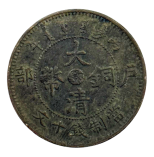
在浩如烟海的中国近代钱币收藏中“铜元”往往承载着一段被遗忘的历史。这枚户部丙午中心鄂字大清铜币当制钱十文,正是晚清币制改革浪潮中一枚极具代表性的实物标本,它不仅是一种流通货币,更是清末中央集权与地方势力博弈、传统与近代文明碰撞的时代缩影。
In the vast collection of modern Chinese coins, copper currency bears a long-forgotten history. This Hubu Bingwu year Daqing Tongbi with the central character “E”, valued at ten cash, stands as a highly representative physical relic of the late Qing currency reform. More than merely a circulating currency, it serves as a vivid epitome of the power struggle between central authority and local forces, as well as the collision between traditional culture and modern civilization in the late Qing Dynasty.
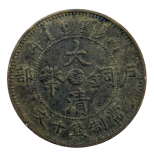
这枚光绪元宝大清铜币户部版铜元,是一枚收藏价值极高的背逆错版币。这是因为清末铸币模具装配错位、机器冲压偏差、工艺管控不完善等历史原因,钱币正反面图案与文字角度严重偏移,属于铸币时期原生工艺失误,为官方铸币出厂自带的正版错版币种。并非后天人为改造破损,存世量稀少,版式特殊,是清代铜元中极具代表性的错版古币,收藏与历史研究价值格外突出。
This Hubu-version Guangxu Yuanbao and Daqing Tongbi copper coin is a highly valuable rotated reverse error coin for collection. Affected by historical factors such as misaligned die assembly, stamping deviations and imperfect process management in the late Qing Dynasty, the patterns and inscriptions on the obverse and reverse of the coin are severely angularly displaced. It originates from original minting technical errors and is a genuine official error coin released by the imperial mint. Free from artificial modification or acquired damage, it features a rare surviving quantity and a special layout. As a representative error copper coin of the Qing Dynasty, it boasts outstanding collection value and historical research significance.
光绪三十二年,也就是公元 1906 年,清政府正处于风雨飘摇的末期。此前,由于制钱制度崩溃、铜价飞涨,各省为缓解钱荒,纷纷仿造西式机器铸造铜元,一时间 “光绪元宝” 铜元泛滥于市。然而,各省各自为政、标准不一的铸造,很快导致币制混乱、私铸盛行,严重冲击了中央财政与市场秩序。为了整顿圜法、统一铸币权,清政府于 1905 年颁布《整顿圜法章程》,决定以户部造币总厂为中心,在全国推行统一的 “大清铜币”,并以干支纪年和中心省名来区分铸造地,试图将分散的铸币权重新收归中央。这枚丙午年中心鄂字铜元,正是湖北武昌造币厂响应中央号令,采用部颁祖模铸造的首批标准化铜元之一。
In the 32nd year of the Guangxu reign, the Qing Dynasty stood in its turbulent and declining final years. Previously, with the collapse of the traditional cash coin system and the skyrocketing price of copper, provinces across the country adopted Western-style minting machinery to strike copper coins in response to the currency shortage. As a result, Guangxu Yuanbao copper coins flooded the market in a short time.Nevertheless, unregulated provincial minting with inconsistent standards led to severe monetary disorder and rampant private counterfeiting, which greatly undermined national finance and market order. To rectify the currency system and centralize minting rights, the Qing government issued the Regulations on Currency Reform . It decided to take the Hubu General Mint as the core to promote the unified "Daqing Tongbi" nationwide. These coins were marked with celestial-stem-and-branch years and provincial characters at the center to distinguish mints, aiming to reclaim the scattered coinage authority.This Bingwu-year copper coin with the central character "E" (Hubei) is one of the first standardized copper coins struck by the Wuchang Mint in Hubei in compliance with central orders, adopting the official master dies issued by the Board of Revenue.
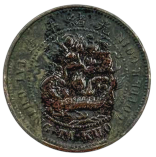
这枚铜元的形制设计,处处体现着中央集权的意志与时代的烙印。钱币正面,珠圈内是四个遒劲的 “大清铜币” 汉字,中央阴刻的 “鄂” 字,明确标示了它的诞生地 —— 湖北武昌。珠圈外上方为满文,代表清廷;两侧分列 “户部” 与 “丙午” 纪年,点明了铸造机构与年份;下方的 “当制钱十文”,则规定了它的法定面值。背面,一条威严的大清龙盘踞其间,龙纹铸造精细,鳞爪分明,是典型的 “部颁龙” 样式,象征着皇权的至高无上。龙纹外围环绕 “光绪年造” 与英文 “TAI-CHING-TI-KUO COPPER COIN”,这种中西合璧的设计,既保留了传统帝制的象征,又迎合了当时国际贸易的需要,成为晚清 “中体西用” 思想在钱币上的直接体现。
The design of this copper coin fully embodies the will of centralization and the brand of its era. On the obverse, four powerful Chinese characters “Da Qing Tong Bi” are enclosed within a bead circle. The engraved character “E” at the center clearly marks its origin — Wuchang, Hubei Province. Above the bead circle lies Manchu script representing the Qing imperial court. On both sides are inscribed “Hubu” and the Ganzhi year “Bingwu”, indicating the minting authority and production date. The inscription “Dang Zhi Qian Shi Wen” at the bottom defines its legal denomination.On the reverse, a majestic Qing dragon coils in the center with exquisitely carved scales and claws, presenting a standard official dragon pattern issued by the central government, which symbolizes the supremacy of imperial power. Surrounding the dragon are the Chinese characters “Guang Xu Nian Zao” and the English inscription “TAI-CHING-TI-KUO COPPER COIN”. This integrated Chinese-Western design not only retains the symbols of traditional imperial system but also adapts to the needs of international trade at that time, serving as a direct reflection of the late Qing’s ideology of “Chinese essence with Western application” on currency.
从铸造工艺来看,这枚铜元采用当时先进的机器冲压工艺,形制规整,边齿周正,展现了晚清中国造币技术的最高水平。尽管历经百年流通与岁月侵蚀,币面已形成一层温润的包浆,但其文字与龙纹依然清晰可辨,细节处的力度与神韵未减。这种机器铸造的铜元,以其统一的成色、规格和难以伪造的特点,迅速取代了沿用两千多年的方孔制钱,成为近代中国货币体系的重要组成部分。然而,这种中央主导的币制改革,终究无法挽救清王朝的命运。随着辛亥革命的枪声响起,大清铜币的铸造戛然而止,它所承载的中央集权梦想,也随着封建帝制的覆灭一同化为泡影。
In terms of minting craftsmanship, this copper coin was produced with the advanced mechanical stamping technology of its time. It features a regular shape and neat rims, representing the highest level of minting techniques in the late Qing Dynasty. Despite centuries of circulation and natural erosion over time, the coin has developed a mellow natural patina. Its inscriptions and dragon patterns remain clearly distinguishable, with intact strength and verve in every fine detail.Machine-struck copper coins, boasting standardized fineness and specifications alongside strong anti-counterfeiting properties, quickly replaced the square-holed cash coins that had been in use for more than two thousand years, becoming a vital component of modern China’s monetary system.Nevertheless, the centrally led currency reform could not save the declining Qing Dynasty. With the outbreak of the Revolution, the mintage of Daqing Tongbi came to an abrupt halt. The dream of centralized power it embodied vanished completely along with the collapse of the feudal imperial system.
每一道磨损、每一处包浆,都是它百年岁月的印记,诉说着那个动荡年代里,清政府试图力挽狂澜却最终无力回天的挣扎。收藏这样一枚钱币,不仅仅是收藏一件古物,更是触摸一段真实的历史,感受一个王朝在落幕前最后的努力与挣扎。它提醒我们“铜元”也可以成为解读一个时代的钥匙,让我们在方寸之间,读懂晚清中国的风雨飘摇与历史必然。
Every trace of wear and every patch of patina bears the marks of its century-long passage of time, recounting the late Qing government’s desperate yet futile struggle to turn the tide amid turbulent times. Collecting such a coin is far more than possessing an ancient artifact; it is a chance to touch real history and witness the final efforts and lingering struggles of a dynasty on the verge of collapse. It reminds us that copper coins serve as a key to interpreting an era. Within this tiny piece of metal, we may perceive the turbulent fate and historical inevitability of the late Qing Dynasty.
张松茂《三顾茅庐》雪景瓷板画:瓷上丹青的张松茂《三顾茅庐》雪景瓷板画:瓷上丹青的三国绝唱 在中国当代陶瓷美术史上,张松茂以 “雪景大王”的美誉,将粉彩瓷...
光绪元宝大清铜币户部版 银锭一组 张松茂《三顾茅庐》雪景瓷板画:瓷上丹青的 刘智《吉利九鱼图》:笔墨生韵的吉祥画卷与

Copyright © 2002-2018 中国母婴网 版权所有 备案号:
站点声明:本网内容为转载,为广告,相关素材由广告主提供,广告主对本广告内容的真实性负责。
本网发布目的在于传递更多信息,并不代表本网赞同其观点和对其真实性负责,转载内容仅供读者参考。
如有站点名称冲突,侵权等请联系我们删除,请您监督!