时间:2026-07-24来源:网络作者:adminf


Premium Recommendation — Sichuan Silver Coin
*本次藏品:四川银币*
典藏尺寸:重:26g 直径:39.2mm
这枚距今逾百年的传世老银元,是辛亥革命浪潮席卷西南的核心实物见证,兼具不可复制的历史底蕴、独特的地域文化符号与稳步攀升的市场收藏价值,在全国机制银币收藏版图中占据无可替代的一席之地,是川渝本地藏家心心念念、全国钱币爱好者争相寻觅的经典川洋重器。1911 年武昌起义一声枪响,全国各省纷纷响应独立,而四川,正是保路运动的发源地,是点燃辛亥革命的关键火种之地。彼时清廷在川统治土崩瓦解,四川革命党人联合保路同志会,驱逐清廷总督,正式成立大汉四川军政府,接管成都造币分厂,开启了民国四川自主铸币的全新时代。新政权建立之初,百废待兴。晚清流通的龙洋、外来外币币种繁杂,物价紊乱,军政府军费、地方政务开支无稳定货币支撑。为筹措军需、统一川内流通货币、彻底取代代表封建王朝的清代龙洋,民国元年(1912 年),成都造币厂正式开铸这款以 “汉” 为核心标识的四川银币,成为整个西南地区第一款共和政权官方铸造的机制银元,也是全国为数不多由地方军政府独立发行的标准壹圆银币,历史稀缺性与生俱来。
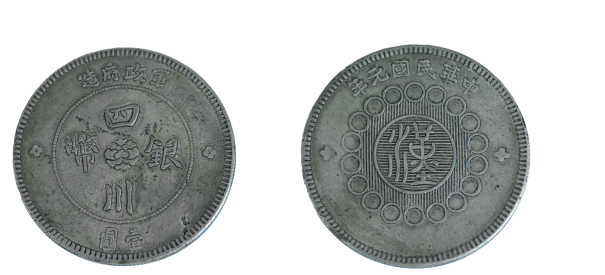
币面所有纹饰、文字,每一处细节都暗藏反清共和的时代宣言:背面中心硕大的篆书 “漢” 字,呼应革命口号 “驱除鞑虏,恢复中华”,象征汉民族挣脱满清统治、建立共和的革命理想;环绕汉字的十八颗圆点,对应当时全国响应辛亥革命独立的十八个行省,方寸之间,藏着山河同庆、共赴共和的壮阔格局;正面中央盛放的芙蓉花,是千年蓉城成都的城市象征,将蜀地文脉与革命精神融为一体,让这枚银币成为独属于四川的历史名片。
纵观近代钱币史,各省军政府多仅发行铜元维持流通,唯有四川军政府完整铸造壹圆标准银币,这一独特属性,让大汉银币跳出普通流通银元范畴,成为研究清末民初西南政治、经济、军事、货币变革的第一手实物史料,其文史价值,远超过同等品相普通流通银元。
本次展出典藏藏品,为军政府造四川银币壹圆标准官铸版,实测重量 26g,直径 39.2mm,完全贴合民国元年成都造币厂官方铸币标准规格,银质成色稳定在 93% 上下,百年流通形成温润自然老包浆,无人工做旧、无修补改刻,币面文字、纹饰完整清晰,是市面上难得一见的原味传世真品,基础参数规范,品相具备极高收藏起点。
银币正面(军政府造四川银币面)
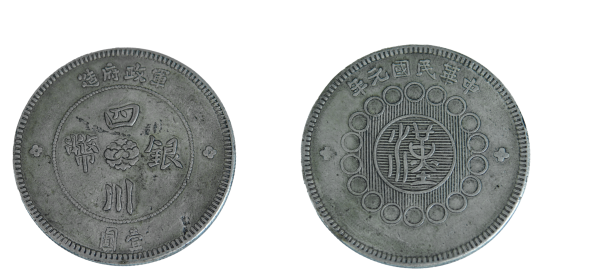
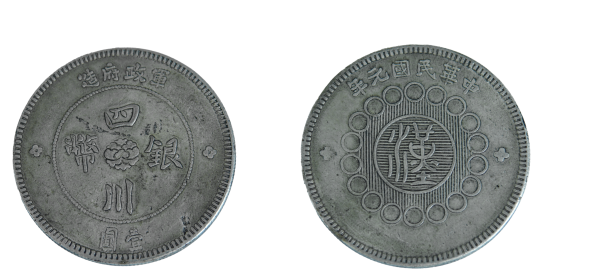
币面上缘环刻楷书 “軍政府造”,字体雄浑厚重,笔画刚劲有力,是民国初年官方标准楷书风格;中心竖排 “四川銀幣” 四大字,四字正中镌刻一朵立体芙蓉花,花瓣纹路层次分明,是区分官铸与后期军阀私铸的核心标识;左右两侧点缀对称四瓣小花星,平衡币面构图;下缘竖书 “壹圓” 二字,明确币值,齿边规整细密,百年流通磨损均匀,无大面积磕碰、戳记,底板平整,原始铸币肌理完整留存。
整体布局疏密有度,中式传统钱币美学与近代机制币冲压工艺完美融合,没有晚清龙洋繁复的皇家纹饰,取而代之的是简洁大气、极具平民革命气质的文字花卉设计,褪去封建王权审美,尽显共和新风,一眼便能感受到新旧时代交替的审美变革。
银币背面(汉字共和纪念面)
币面上缘环绕 “中華民國元年” 纪年,清晰标注铸币年份,断代直观;币面核心区域,篆书 “漢” 字居中,字体舒展大气,笔画冲压深邃,立体感十足;汉字外围环绕十八个等距圆圈,圈纹清晰无模糊,完整对应十八省独立的历史寓意;左右对称小花星与正面纹饰相互呼应,内外圈直线底纹细密均匀,冲压力度充足,无浅打、漏打缺陷。
市面上大量流通品存在 “汉字歪斜、圈纹磨损残缺、底纹模糊” 等瑕疵,而本枚藏品背面核心图案完整度高,没有重度流通磨损带来的纹饰残缺,是标准成都官铸初铸流通品,非后期地方军阀减重、减银私铸劣币,收藏品级区分一目了然。
很多新手藏家容易混淆各类川洋版别,四川大汉银币细分分水汉、大点金、散中花、大中花等数十种版别,其中分水汉等小众名誉品存世稀少,溢价极高;而本枚为经典大中花标准官铸版,属于收藏入门、长线保值的主流精品,受众广、认可度高,流通变现渠道通畅,兼顾收藏观赏性与资产流通性。
This century-old inherited silver dollar stands as a core physical artifact witnessing the spread of the 1911 Revolution across Southwest China. Boasting irreproducible historical heritage, exclusive regional cultural emblems, and steadily rising market collectible value, it occupies an irreplaceable position in the nationwide collection landscape of machine-struck silver coins. It is a iconic Sichuan silver dollar treasure cherished by collectors across Sichuan and Chongqing, and eagerly sought after by numismatists nationwide.
The gunshots of the Wuchang Uprising in 1911 sparked provincial declarations of independence across the country. Sichuan, birthplace of the Railway Protection Movement, was the critical spark that ignited the 1911 Revolution. At that time, the Qing court’s rule in Sichuan collapsed completely. Sichuan revolutionaries united with the Railway Protection Comrades’ Association, expelled the Qing Viceroy, formally established the Great Han Sichuan Military Government, and took over the Chengdu Mint Branch, ushering in a new era of independent silver coinage under the Republic of China in Sichuan.
The fledgling new government faced widespread disarray. A chaotic mix of late Qing dragon silver dollars and foreign currencies circulated, triggering volatile commodity prices. The military government lacked a stable monetary supply to cover military expenditure and local administrative costs. To fund military supplies, unify circulating currency within Sichuan, and fully replace the Qing dragon silver dollars symbolic of feudal monarchy, the Chengdu Mint officially struck this silver coin centered on the Chinese character “Han” in the first year of the Republic of China (1912). It became the first officially minted machine-struck silver dollar issued by a republican regime across Southwest China, and one of the very few standard one-yuan silver dollars independently released by a regional military government nationwide, endowing it with innate historical scarcity.
Every pattern and inscription on the coin conceals a declaration of revolution against the Qing and for republicanism: At the center of the reverse side sits a large seal script character “Han”, echoing the revolutionary slogan “Expel the Tartars, Restore China”. It embodies the revolutionary aspiration of the Han people breaking free from Manchu rule to establish a republic. Eighteen circular dots encircling the character “Han” represent the eighteen provinces that declared independence in response to the 1911 Revolution. Within this tiny coin lies the grand vision of a unified nation celebrating the birth of republican governance. A hibiscus flower carved at the center of the obverse is the city symbol of Chengdu, the City of Hibiscus with a thousand years of history. It seamlessly integrates Sichuan’s cultural heritage with revolutionary spirit, making this silver coin an exclusive historical emblem of Sichuan.
A review of modern numismatic history reveals that most provincial military governments only issued copper coins for circulation. Only the Sichuan Military Government fully produced standard one-yuan silver dollars. This unique trait elevates the Great Han silver dollar beyond ordinary circulating silver coins, rendering it a primary physical source for researching political, economic, military and monetary transformations in Southwest China from the late Qing to early Republican eras. Its cultural and historical value far surpasses that of ordinary circulating silver dollars of identical condition.
The collectible piece on display today is an official standard strike of the Military Government Sichuan One-Yuan Silver Dollar. It measures 26 grams in weight and 39.2 millimeters in diameter, fully conforming to the official mint specifications set by the Chengdu Mint in the first year of the Republic of China. Its silver purity hovers around 93%. Over a century of circulation, it has developed a soft, natural original patina, free of artificial aging, repair or recarving. All inscriptions and patterns remain sharp and intact, making it a rare authentic inherited specimen on the market with standard fundamental metrics and outstanding collectible quality.
The top rim bears regular script inscriptions reading “Military Government Mintage”, featuring bold, forceful brushstrokes characteristic of official standard regular script in the early Republican period. Four large vertical characters “Sichuan Silver Coin” occupy the central field, with a three-dimensional hibiscus flower carved right at their core. The layered, distinct petal veins serve as a key marker distinguishing official mint strikes from debased private counterfeits produced by warlords in later years. Symmetrical four-petaled floral stars adorn both left and right sides to balance the coin’s composition. The lower rim carries vertical characters “One Yuan” marking its denomination. The serrated edge is uniform and fine, showing only even wear from over a century of circulation without large dents or punch marks. The coin’s base field remains smooth, fully preserving the original texture of the mint strike.
The overall layout strikes a perfect balance between density and blank space, merging traditional Chinese coin aesthetics with modern machine-striking craftsmanship. Abandoning the intricate royal ornamentation of late Qing dragon silver dollars, it adopts a minimalist, grand design of characters and blooms steeped in populist revolutionary temperament. Shedding the aesthetic of feudal imperial power, it fully embodies the fresh ethos of republicanism, allowing viewers to instantly perceive the artistic shift between two eras.
The top rim encircles the inscription “First Year of the Republic of China”, clearly dating the coin for straightforward chronological identification. A seal script “Han” character dominates the central field, its elegant, expansive form deeply struck with strong three-dimensional relief. Eighteen evenly spaced circles surround the character, their crisp outlines fully preserving the historical symbolism of eighteen independent provinces. Symmetrical floral stars on left and right mirror the ornamentation on the obverse. Fine, uniform linear background texture fills the inner and outer fields, struck with ample pressure without shallow or incomplete impressions.
Most circulating specimens on the market suffer flaws such as slanted “Han” characters, worn and incomplete circular dots, and blurred background texture. In contrast, this collectible retains high integrity of its core reverse motifs, free of pattern damage caused by heavy circulation wear. It is a standard early circulation strike from the official Chengdu Mint, not a debased private counterfeit minted by regional warlords with reduced weight and silver content — the distinction in collectible grade is crystal clear.
Many novice collectors confuse the various sub-varieties of Sichuan silver dollars. The Great Han silver dollar features dozens of sub-types including the split-stroke Han, golden dot, scattered middle flower, and large central flower varieties. Rare niche prestige varieties such as the split-stroke Han boast extreme scarcity and substantial premium value. This specimen, however, is the classic large central flower official standard strike: a mainstream premium collectible ideal for entry-level collection and long-term value preservation. It enjoys broad market recognition, smooth resale channels, and balances ornamental appeal with asset liquidity.
*本次藏品:四川银币*
典藏尺寸:重:26g 直径:39.2mm
文物收藏的核心内核,永远是历史赋予的独特叙事,四川大汉银币的文化稀缺性,是普通银元无法比拟的。它诞生于保路运动、辛亥革命两大近代重大历史事件交汇节点,是四川从封建清廷管辖过渡到共和自治政权的直接物证。如今各类近代史展馆、钱币博物馆,均将四川大汉银币作为民国初期西南货币史重点展陈文物,足以印证其文史地位。
一枚银元,串联起百年巴蜀记忆:从保路同志会举义,到大汉军政府成立,再到民国初期四川货币体系建立,所有宏大历史进程,都浓缩在这方寸银币之上。收藏它,不止收藏一枚老银元,更是收藏一段属于四川本土、独一无二的革命历史,兼具地方情怀与全国近代史研究意义,本地藏家对其认可度、偏爱程度远超外来币种。
民国初年四川局势动荡,铸币周期有限,后期军阀混战、银料匮乏,大量老银元被熔毁重铸劣币;建国后数次货币回收、银料熔炼,民间完整留存、无修补无做旧的原味真品数量持续锐减。早年大量通货流通品,经过数十年藏家沉淀、评级入盒、馆藏收纳,流通市场中品相完好的裸币逐年变少,原味未清洗老包浆藏品更是一币难求。
对比市面上泛滥的仿品、修补品、私铸减重劣币,像本次这件重量、直径、成色全部达标,纹饰完整、包浆自然的官铸壹圆,属于市场硬通货。近年来全国钱币拍卖会中,品相上佳的四川大汉银币成交价格稳步上扬,无大幅波动,抗通胀能力突出,不同于炒作型文玩,机制老银元依托贵金属属性 + 文物属性双重兜底,长线收藏保值逻辑清晰。
近年古钱币收藏市场细分赛道趋势明显,川渝本土机制币成为独立热门收藏板块,本地藏家群体庞大,外地专业钱币投资者也持续布局川洋精品,四川大汉银币作为川洋标杆品种,市场需求常年旺盛。
对比大众熟知的袁大头、孙小头,普通年份壹圆银元存世量巨大,增值速度平缓;而四川大汉银币因地域限定、铸币周期短、存世更少,同等品相下市场溢价长期领先普通中央铸币银元。通货普通流通品行情稳步上涨,原味美品、名誉版更是年年刷新拍卖成交价,兼具把玩鉴赏、长线保值、文化传承三重属性,无论是入门新手搭建川洋收藏体系,还是资深藏家补齐辛亥主题藏品序列,都是不可或缺的核心藏品。
同时,银币贵金属基底自带避险属性,白银本身具备稳定价值,叠加百年文物附加价值,双重价值托底,相比字画、瓷器等养护门槛极高的藏品,银元储存、携带、鉴定门槛更低,流通渠道完善,线上线下钱币交流会、拍卖行、专业币商均有稳定流通渠道,变现灵活,是兼顾情怀与资产配置的优质文玩藏品。
The core essence of cultural relic collection always lies in the unique historical narratives bestowed by time. The cultural scarcity of the Sichuan Great Han Silver Dollar is unmatched by ordinary silver coins. Minted at the crossroads of two pivotal modern Chinese historical events—the Railway Protection Movement and the 1911 Revolution—it serves as direct physical evidence documenting Sichuan’s transition from Qing feudal rule to an autonomous republican government. Today, modern history museums and numismatic institutions across the country feature this silver dollar as a key exhibit illustrating the monetary history of Southwest China in the early Republic of China, a testament to its profound historical and cultural standing.
This single silver coin weaves together a century of Bashu memories: the uprising of the Railway Protection Comrades’ Association, the founding of the Great Han Sichuan Military Government, and the establishment of Sichuan’s monetary system in the early Republican era. All these grand historical developments are condensed within its tiny circular form. To collect this coin is far more than acquiring an antique silver dollar; it means preserving a one-of-a-kind revolutionary history indigenous to Sichuan. It carries profound local sentimental value alongside national significance for the study of modern Chinese history, earning far greater recognition and affection among local collectors than silver coins issued elsewhere.
Sichuan endured turbulent unrest in the early Republic of China, limiting the official coinage period. Warlord infighting and shortages of silver bullion in subsequent decades led countless vintage silver dollars to be melted down to produce debased counterfeit currency. After the founding of the People’s Republic of China, multiple national currency recall campaigns and large-scale silver smelting further diminished the stock of authentic, untouched specimens preserved among private collections—coins free from repairs or artificial patina treatments. Decades of consolidation by collectors, grading encapsulation, and museum acquisitions have steadily reduced the number of well-preserved raw coins available on the open market. Specimens retaining their original, unwashed natural patina have become exceptionally rare and hard to source.
In stark contrast to the flood of replicas, repaired coins, and underweight warlord counterfeits saturating the market, this official one-yuan strike fully meets all standard benchmarks for weight, diameter and silver purity, boasting intact engravings and authentic natural patina—making it a reliable market staple. At national numismatic auctions in recent years, well-preserved examples of the Sichuan Great Han Silver Dollar have seen steady, moderate price growth with no extreme volatility, demonstrating strong inflation-resistant value. Unlike speculative cultural collectibles, machine-struck antique silver dollars enjoy dual value backing: intrinsic precious metal worth plus cultural relic heritage value, creating a clear, reliable long-term wealth preservation rationale.
The antique coin collecting market has grown increasingly segmented in recent years, with machine-struck coins native to Sichuan and Chongqing emerging as a standalone, highly sought-after collecting niche. The region boasts a massive base of local collectors, while professional numismatic investors from across the country continue to acquire premium Sichuan silver dollars. As the flagship variety of all Sichuan silver coinage, the Great Han Silver Dollar maintains consistent, robust market demand year-round.
Commonly encountered silver dollars such as Yuan Shikai Dollars and Sun Yat-sen Small Head Dollars were minted in enormous quantities, resulting in slow, modest value appreciation. By comparison, the Sichuan Great Han Silver Dollar was produced for a short period limited exclusively to Sichuan, leaving a far smaller surviving population. Coins of identical condition consistently command a substantial market premium over standard silver dollars minted by the central government. While average circulated examples enjoy steady price appreciation, premium original-condition specimens and prestigious rare varieties repeatedly set new auction record highs year after year. It unites three core merits: ornamental appreciation, long-term value retention, and cultural inheritance. Whether a new collector building a comprehensive collection of Sichuan silver coinage, or a seasoned numismatist completing a curated series of 1911 Revolution-themed relics, this coin is an indispensable centerpiece.
Additionally, silver’s inherent status as a precious metal grants the coin natural risk-hedging properties. Silver itself holds stable intrinsic value, amplified by over a hundred years of accumulated cultural relic premium, forming a dual safety net of value. Compared to paintings, calligraphy, porcelain and other high-maintenance antiques, silver coins feature lower barriers for storage, transportation and authentication, supported by mature, accessible circulation channels including online and offline numismatic fairs, auction houses and professional coin dealers. They offer flexible liquidity, making them an exceptional cultural collectible that balances personal historical sentiment with rational asset allocation.
*本次藏品:四川银币*
典藏尺寸:重:26g 直径:39.2mm
以上藏品相关信息请与四川极蕴拍卖有限公司联系,我们将为您提供一对一专业服务。
For more information about this collection, please contact Sichuan Jiyun Auction Co., Ltd. We will provide you with one-on-one professional service.
汉代和田玉镂空龙凤纹佩:汉玉镂空工艺与祥汉代是中华玉文化发展的黄金鼎盛阶段,宫廷设立专门玉署把控优质和田玉料雕琢,镂空玉佩作为贵族专属随身玉饰,融合礼...
清代光绪元宝铜元:晚清时代变革里的龙纹钱 汉代和田玉凤纹出廓双联谷纹玉璧:汉廷独藏 汉代和田玉镂空龙凤纹佩:汉玉镂空工艺与祥 明代和田玉玉斧佩:承古礼韵的文人随身独玉

Copyright © 2002-2018 中国母婴网 版权所有 备案号:
站点声明:本网内容为转载,为广告,相关素材由广告主提供,广告主对本广告内容的真实性负责。
本网发布目的在于传递更多信息,并不代表本网赞同其观点和对其真实性负责,转载内容仅供读者参考。
如有站点名称冲突,侵权等请联系我们删除,请您监督!