时间:2026-06-24来源:网络作者:admin


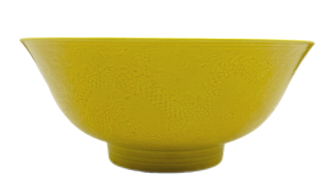
在中国古陶瓷千年发展脉络中,黄釉瓷器是封建时代独属于皇室的御用重器,黄色作为帝王专属之色,承载着森严的古代等级制度。大明宣德一朝是明代御窑发展的黄金时代,单色釉烧制技艺达到前所未有的高度,这件宣德年制黄釉暗刻龙纹碗,通体施纯正娇黄釉,外壁暗刻祥云双龙纹样,底书标准青花六字款,将明初顶尖单色釉烧制工艺、龙纹皇权图腾与皇家礼制文化融为一体,匀净温润的明黄釉层之下,诉说着“黄尊帝权、龙显君威、瓷载礼法”的官窑陶瓷内核,既是宣德黄釉御用瓷器的经典范本,也是映照明初宫廷制度与制瓷巅峰水准的珍贵实物遗存。
In the thousand-year development of ancient Chinese ceramics, yellow-glazed porcelain is exclusive imperial ware unique to the feudal royal family. As the exclusive color of emperors, yellow bears the strict hierarchical system of ancient times. The Xuande reign of the Ming Dynasty marked the golden age of Ming imperial kilns, when the firing technology of monochrome glaze reached an unprecedented height. This yellow-glazed bowl with secretly carved double dragon patterns made in Xuande reign is fully covered with pure tender yellow glaze, with secretly carved double dragons amid auspicious clouds on the outer wall and a standard six-character blue and white inscription at the base. It perfectly integrates the top monochrome glaze firing technology of the early Ming Dynasty, dragon totem representing imperial power and royal ritual culture. Beneath the smooth and mild bright yellow glaze layer, it interprets the core of official kiln ceramics: yellow symbolizes imperial supremacy, dragon manifests sovereign dignity, and porcelain carries rituals. It is not only a classic model of imperial yellow-glazed porcelain of the Xuande reign, but also a precious physical relic reflecting the court system and peak porcelain-making standard of the early Ming Dynasty.

从器型、釉色、纹饰与款识细节品读,这件黄釉龙纹碗完整保留宣德御窑正统制式特征。器物采用经典撇口深腹碗造型,口沿平缓外敞,腹身饱满柔和,底部收束至规整圈足,整体线条舒展圆润,稳重典雅,完全贴合明代宫廷日用御器的审美规范。器物内外通体满覆娇黄釉,釉层厚薄均匀,色泽纯正温润,无杂色、流釉、斑驳瑕疵,釉面细腻莹润,光线之下泛出柔和的蜡质光泽,是宣德黄釉独有的烧制质感。外壁采用阴刻暗雕工艺勾勒双龙祥云,巨龙穿梭于流云之间,龙鳞、龙爪、龙须刻画清晰利落,刻纹深浅适中,隐于黄釉之下,若隐若现,含蓄内敛,尽显皇室器物不事张扬的华贵气度。碗底留白釉,双圈环绕楷书“大明宣德年制”六字款,字体雄浑端庄,青花发色沉静素雅,是后世鉴定宣德官窑瓷器的核心标识。每一道暗刻龙纹、每一寸匀净黄釉、每一处流畅器型,都凝聚着宣德御窑工匠数十年打磨的纯熟功力,是研究明代早期单色釉、暗刻工艺的关键实物依据。
When we appreciate this yellow-glazed dragon bowl from the details of shape, glaze color, decoration and inscription, it completely retains the orthodox format features of Xuande imperial kilns. The vessel adopts a classic flared deep-bowl shape, with gently open rim, full soft belly tapering to a neat ring foot at the bottom. The overall lines are stretched and round, stable and elegant, fully conforming to the aesthetic standards of daily imperial wares in the Ming court. The whole vessel inside and out is fully covered with tender yellow glaze with even thickness, pure mild color free of impurities, glaze flow or mottling defects, delicate lustrous glaze surface with soft waxy luster under light, the unique firing texture exclusive to Xuande yellow glaze. The outer wall adopts intaglio secret carving craft to depict double dragons and auspicious clouds. Giant dragons weave through flowing clouds with clear neat carvings of scales, claws and whiskers. The carving depth is moderate, faintly hidden under yellow glaze, reserved and restrained, fully showing the understated luxury of royal wares. The bowl base is covered with white glaze, bearing six regular script characters "Made in the Xuande Reign of the Great Ming" encircled by double blue rings, powerful dignified font and quiet plain blue pigment tone, the core mark for authenticating Xuande official kiln porcelain for later generations. Every secretly carved dragon line, every inch of even yellow glaze and every smooth vessel shape condenses the seasoned skill of Xuande imperial kiln craftsmen honed for decades, serving as vital physical evidence for researching monochrome glaze and secret carving craft in the early Ming Dynasty.
烧制工艺与礼制人文内涵层面,宣德黄釉龙纹碗承载着“御窑精工为骨,皇家礼制为魂”的创作内核。宣德时期御窑厂直属朝廷管控,黄釉瓷器的生产有着严苛流程:胎土经多层淘洗提纯,细腻致密;黄釉料配比、窑内升温降温节奏均有固定规制,需多次入窑分段烧制,只有釉色完美无瑕的成品才可送入皇宫,稍有瑕疵便就地销毁,因此民间完整流传的宣德黄釉官窑极为稀少。在明代森严礼制中,黄色为帝王专属色彩,仅皇帝、太后、皇后能够使用通体纯黄器皿;龙纹是皇权至高无上的图腾,双龙纹样寓意江山永固、帝王福德绵长,二者结合,让这件瓷碗成为承载等级秩序的礼器。它多用于宫廷御膳、岁时祭祀,将严苛礼法融入日常器物,践行明代“器以载礼”的文化思想。从泥胎塑形、暗刻纹饰、施釉到柴窑高温淬炼,数十道工序层层把关,完美融合顶尖制瓷技艺、封建等级观念与吉祥祈福寓意。
In terms of firing craft and humanistic ritual connotation, the Xuande yellow-glazed dragon bowl carries the creative core of exquisite imperial kiln craftsmanship as the foundation and royal rituals as the soul. The imperial kiln factory in Xuande reign was directly administered by the imperial court, with strict procedures for producing yellow-glazed porcelain: clay underwent multi-layer elutriation and purification to become fine and compact. Fixed standards were set for yellow glaze proportion and kiln temperature fluctuation, requiring multiple segmented kiln firings. Only flawless finished wares could be delivered to the palace, while slightly defective ones were destroyed on site, so intact Xuande official yellow-glazed wares circulating among civilians are extremely rare. Under the strict rituals of the Ming Dynasty, yellow was the exclusive color of emperors, and only emperors, empress dowagers and empresses were allowed to use full yellow utensils. Dragon patterns are a totem of supreme imperial power, and double dragon patterns symbolize enduring national fortune and long imperial virtue. The combination of the two turns this porcelain bowl into a ritual vessel bearing hierarchical order. It was mostly used for imperial meals and seasonal sacrifices, integrating strict rituals into daily utensils and practicing the Ming cultural thought of "utensils bearing rituals". Dozens of procedures including clay shaping, secret carving, glazing and high-temperature wood kiln tempering were strictly checked layer by layer, perfectly integrating top porcelain-making skills, feudal hierarchy concepts and auspicious blessing implications.
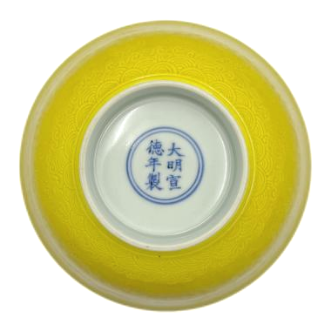
历史与收藏价值维度看,大明宣德黄釉暗刻龙纹碗是明初皇家礼制陶瓷的微型文化缩影。作为宣德单色釉御用重器,这件黄釉龙碗凭借纯正娇黄釉色、正统双龙暗刻纹饰、标准六字官窑款,成为单色釉收藏领域稀缺的顶级珍品,兼具不可复刻的宫廷历史价值、制瓷工艺研究价值与传世收藏保值价值。完整无磕冲、釉色完好的宣德黄釉存世量极少,绝大多数馆藏于国家级公立博物馆,民间完整真品难得一见。它早已超越饮食器具的实用属性,成为串联明代御窑管理制度、封建等级礼制、单色釉陶瓷发展史的核心文化纽带,是陶瓷史学界复原明初皇室生活、手工业发展、宫廷审美的一手实物史料。静静端详这件黄釉龙碗,匀净温润的帝王黄铺满器身,隐现的龙纹暗藏威严,观者得以透过瓷釉回望宣德盛世的王朝气象,读懂黄釉背后层层森严的皇家礼法,感受明代御窑独步后世、无可复刻的单色釉制瓷艺术魅力。
From the perspective of historical and collection value, the Xuande yellow-glazed secretly carved dragon bowl of the Great Ming is a miniature cultural epitome of royal ritual ceramics in the early Ming Dynasty. As an important imperial monochrome ware of the Xuande reign, this yellow-glazed dragon bowl is a scarce top treasure in monochrome glaze collection for its pure tender yellow tint, orthodox secretly carved double dragon patterns and standard six-character official kiln mark, possessing irreproducible imperial historical value, porcelain craft research value and heritage collection preservation value. Intact Xuande yellow-glazed wares without chips or cracks are extremely rare, most permanently collected in national public museums, and complete genuine pieces in private hands are hard to come by. It has long transcended the practical attribute of tableware, evolving into a vital cultural link connecting the Ming imperial kiln management system, feudal hierarchical rituals and the development history of monochrome glaze ceramics, serving as first-hand physical historical material for ceramic historians to restore royal life, handicraft development and court aesthetics of the early Ming Dynasty. When we quietly appreciate this yellow-glazed dragon bowl, even and mild imperial yellow covers the whole vessel, and the faintly emerging dragon patterns hide solemn dignity. Viewers can look back at the prosperous dynasty atmosphere of the Xuande reign through the glaze, understand the layers of strict royal rituals behind yellow glaze, and experience the unmatched, irreproducible artistic charm of monochrome glaze porcelain making in Ming imperial kilns.
徐悲鸿《奔马图》:笔墨奔马里的时代风骨在中国近现代美术史上,徐悲鸿以写实主义国画革新、独创的奔马形象屹立于画坛之巅,马既是他最钟爱的创作题材,也是其...
大明成化青花缠枝宝相花碗:淡雅青花里的成 大明宣德黄釉暗刻双龙纹碗:帝王御瓷里的明 徐悲鸿《奔马图》:笔墨奔马里的时代风骨 宋式哥窑鼓钉洗:金丝铁线间的宋瓷哲思

Copyright © 2002-2018 中国母婴网 版权所有 备案号:
站点声明:本网内容为转载,为广告,相关素材由广告主提供,广告主对本广告内容的真实性负责。
本网发布目的在于传递更多信息,并不代表本网赞同其观点和对其真实性负责,转载内容仅供读者参考。
如有站点名称冲突,侵权等请联系我们删除,请您监督!