时间:2026-05-19来源:网络作者:admin


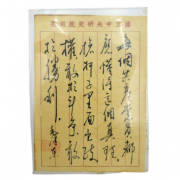
在中国现代书法史上,毛泽东的书法以其雄浑大气、笔走龙蛇的风格,成为革命文化与书法艺术完美融合的典范。这件毛泽东手书作品,以国立中央研究院用笺为载体,书写了“每个共产党员都应懂得这个真理,枪杆子里面出政权,敢于斗争,敢于胜利”的革命名言,融草书笔法、革命精神与领袖风骨于一体,将革命年代的斗争意志、领袖智慧与书法艺术的巅峰水平融为一体,在笔墨流转间诉说着“以笔为器、以字传志、以墨载道”的革命文化逻辑,既是毛泽东书法的典型体现,更是中国革命历史的珍贵遗存。
In the history of modern Chinese calligraphy, Mao Zedong's calligraphy, with its powerful and unrestrained style, has become a model of the perfect integration of revolutionary culture and calligraphy art. This handwritten work by Mao Zedong, using the letterhead of the National Central Research Institute as the carrier, wrote the revolutionary famous saying: "Every Communist Party member should understand this truth: political power grows out of the barrel of a gun. Dare to struggle, dare to win." It integrates cursive brushwork, revolutionary spirit and leader's character, blending the fighting will of the revolutionary era, leader's wisdom and the peak level of calligraphy art. Between the flowing brush and ink, it conveys the revolutionary culture logic of "taking the pen as a vessel, conveying aspirations with characters, and carrying the way with ink". It is not only a typical embodiment of Mao Zedong's calligraphy, but also a precious relic of Chinese revolutionary history.
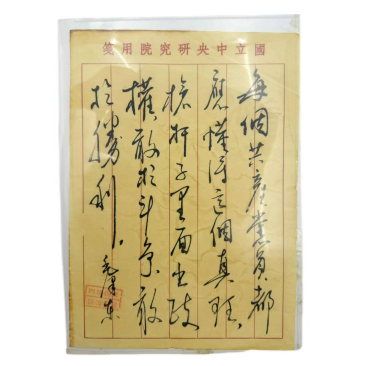
从藏品来源来看,这件作品的流传过程极具传奇色彩。上世纪60年代初,我国爆发了史无前例的“文化大革命”,在“破四旧、立四新”的号召下,全国掀起了清理旧物的热潮,红卫兵横扫一切“旧文化、旧事物”。当时,以“四人帮”为首的红卫兵对中央机关的绝密档案、机密文件进行清理扫除,大量文革前的国家机密文件被认定为“陈旧性文件”,面临销毁。销毁工作由中国人民解放军总后勤部执行,总后勤部主任袁福林将军目睹大量珍贵文件被投入烈火,于心不忍,在销毁过程中,顺手将这件毛泽东手书作品藏入衣兜,从烈火中抢救了下来。后来,袁福林将军将这件作品作为纪念品赠予他人,使其流入民间,成为世间独一无二的罕见珍品。
From the perspective of the collection's origin, the circulation process of this work is full of legend. In the early 1960s, the unprecedented "Cultural Revolution" broke out in China. Under the call of "destroy the four olds and establish the four news", a wave of cleaning up old objects was set off across the country, and the Red Guards swept away all "old culture and old things". At that time, led by the "Gang of Four", the Red Guards cleaned up the top-secret archives and confidential documents of central organs. A large number of state confidential documents before the Cultural Revolution were identified as "obsolete documents" and faced destruction. The destruction work was carried out by the General Logistics Department of the Chinese People's Liberation Army. General Yuan Fulin, Director of the General Logistics Department, could not bear to see a large number of precious documents being thrown into the fire. During the destruction process, he hid this handwritten work by Mao Zedong in his pocket and rescued it from the fire. Later, General Yuan Fulin gave this work to others as a souvenir, making it flow into the folk and becoming a unique rare treasure in the world.
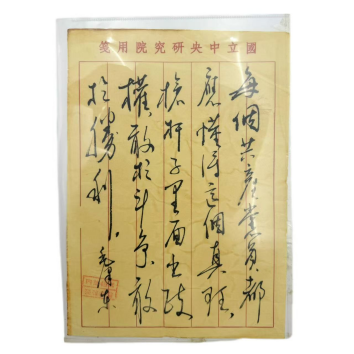
从笔法与内容维度审视,此作尽显“毛泽东书法神韵、革命领袖气象”的特质。作品采用草书形式书写,笔势连绵奔放,线条苍劲有力,起笔如雷霆万钧,收笔如游龙入海,笔画粗细变化自然,提按顿挫分明,尽显草书的灵动与大气。内容上,“每个共产党员都应懂得这个真理,枪杆子里面出政权,敢于斗争,敢于胜利”,字字铿锵有力,笔锋中蕴含着坚定的革命信念与无畏的斗争精神;落款“毛泽东”三字,笔力沉稳,与正文形成呼应,彰显领袖的自信与从容。笺纸为国立中央研究院用笺,淡黄色纸张带有岁月痕迹,红色格线规整,为作品增添了历史厚重感。整体布局疏密有致,字距行距协调,笔墨浓淡相宜,尽显“革命真理、领袖风骨”的精神气象。每一笔线条的勾勒、每一字结构的排布、每一丝墨色的晕染,都凝聚着毛泽东的书法匠心与革命情怀,成为解析革命领袖书法艺术的核心物质纽带。
From the perspective of brushwork and content, this work fully demonstrates the characteristics of "Mao Zedong's calligraphy charm and revolutionary leader's demeanor". The work is written in cursive script, with continuous and unrestrained brush momentum, vigorous lines, thunderous starting strokes and dragon-like ending strokes. The thickness of the strokes changes naturally, with distinct lifting and pressing, showing the agility and grandeur of cursive script. In terms of content, "Every Communist Party member should understand this truth: political power grows out of the barrel of a gun. Dare to struggle, dare to win." Every word is powerful, and the brushstrokes contain firm revolutionary beliefs and fearless fighting spirit. The three characters "Mao Zedong" in the signature are steady in strength, echoing the main text, showing the leader's confidence and calmness. The letterhead is from the National Central Research Institute, with yellowed paper showing traces of time and regular red grid lines, adding a sense of historical heaviness to the work. The overall layout is dense and orderly, with coordinated character and line spacing, and appropriate ink shades, fully showing the spiritual atmosphere of "revolutionary truth, leader's character". Every line outline, every character structure arrangement and every ink dyeing condense Mao Zedong's calligraphy ingenuity and revolutionary feelings, becoming a core material link for analyzing the calligraphy art of revolutionary leaders.
艺术与精神内涵层面,《毛泽东手书革命名言》承载着“书法艺术为骨、革命精神为魂”的创作追求。毛泽东的书法艺术以“二王”草书为根基,兼收怀素、张旭的狂草笔法,形成了独特的“毛体”风格,此作堪称其草书艺术的典范。首先,笔法上,作品运用中锋行笔,线条圆劲有力,转折处如铁画银钩,展现出深厚的书法功底;其次,结构上,字形大小错落有致,欹正相生,打破了传统书法的对称格局,体现了革命领袖打破常规、勇于创新的精神特质;再次,墨法上,浓淡干湿变化丰富,浓墨如泼,淡墨如纱,增强了作品的层次感与艺术感染力。尤为精妙的是,作品的内容与形式高度统一,革命名言的坚定信念与草书的奔放笔势相得益彰,“枪杆子里面出政权”的斗争精神通过苍劲的笔墨跃然纸上,传递出中国共产党人敢于斗争、敢于胜利的革命意志。此作创作于革命年代,毛泽东以书法为载体,将革命思想与艺术表达完美结合,既是革命宣传的工具,也是个人艺术修养的体现。每一次笔墨挥洒、每一处结构变化、每一丝情感流露,都在无声诉说着毛泽东书法艺术的魅力与革命精神的内涵,使这件作品兼具书法艺术的审美美与革命精神的象征美。
In terms of artistic and spiritual connotation, Mao Zedong's Handwritten Revolutionary Famous Sayings embodies the creative pursuit of "calligraphy art as the bone and revolutionary spirit as the soul". Mao Zedong's calligraphy art is based on the cursive scripts of the "Two Wangs", absorbing the wild cursive techniques of Huaisu and Zhang Xu, forming a unique "Mao style". This work can be called a model of his cursive art. First of all, in terms of brushwork, the work uses central brush movement, with round and powerful lines, and the turns are like iron paintings and silver hooks, showing profound calligraphy skills. Secondly, in terms of structure, the characters are arranged in a staggered manner, with both slanting and upright forms, breaking the symmetrical pattern of traditional calligraphy, reflecting the revolutionary leader's spirit of breaking conventions and daring to innovate. Thirdly, in terms of ink method, there are rich changes in density, dryness and wetness. Thick ink is like splashing, and light ink is like gauze, enhancing the layering and artistic appeal of the work. What is particularly exquisite is that the content and form of the work are highly unified. The firm belief of the revolutionary famous sayings complements the unrestrained brush momentum of cursive script. The fighting spirit of "political power grows out of the barrel of a gun" leaps through the vigorous brush and ink, conveying the revolutionary will of the Chinese Communists to dare to struggle and win. Created in the revolutionary era, Mao Zedong used calligraphy as a carrier to perfectly combine revolutionary ideas with artistic expression, which was not only a tool for revolutionary propaganda, but also a reflection of personal artistic accomplishment. Every brush and ink sway, every structural change and every emotional expression silently tell the charm of Mao Zedong's calligraphy art and the connotation of revolutionary spirit, making this work have both the aesthetic beauty of calligraphy art and the symbolic beauty of revolutionary spirit.
历史与收藏价值维度看,毛泽东手书革命名言是中国革命历史与书法艺术的“微观镜像”。作为毛泽东书法的代表作品,这件手书以精湛的书法技艺、鲜明的革命主题与传奇的流传经历,成为中国现代书法的典范,见证了中国革命的历程、领袖的艺术修养与特殊年代的历史变迁。此作以“革命名言手书”为载体,既展现了毛泽东高超的书法水平,又传递出中国共产党人敢于斗争、敢于胜利的革命精神,更因从文革烈火中被抢救的经历,成为一段特殊历史的见证。在当代收藏语境下,毛泽东的手书作品因其特殊的历史地位、艺术价值与传奇经历,成为红色收藏界的顶级珍品,兼具历史价值、文化价值与收藏投资价值。这件手书不仅是一件书法作品,更是连接中国革命历史与当代世界的文化纽带,承载着革命年代的斗争记忆、领袖的艺术才情与红色文化的深厚内涵,是研究中国革命史、红色文化与现代书法艺术的重要实物资料。每一次观赏,都是一次与革命领袖的对话,感受书法艺术的魅力与革命精神的力量。
From the perspective of historical and collection value, Mao Zedong's handwritten revolutionary famous sayings are a "micro mirror" of Chinese revolutionary history and calligraphy art. As a representative work of Mao Zedong's calligraphy, this handwritten work, with its exquisite calligraphy skills, distinct revolutionary theme and legendary circulation experience, has become a model of modern Chinese calligraphy, witnessing the course of the Chinese revolution, the leader's artistic accomplishment and the historical changes of the special era. Taking the "handwritten revolutionary famous sayings" as the carrier, this work not only shows Mao Zedong's superb calligraphy level, but also conveys the revolutionary spirit of the Chinese Communists to dare to struggle and win. Moreover, because it was rescued from the fire during the Cultural Revolution, it has become a witness to a special period of history. In the contemporary collection context, Mao Zedong's handwritten works have become top treasures in the red collection circle due to their special historical status, artistic value and legendary experience, with historical value, cultural value and collection investment value. This handwritten work is not only a calligraphy work, but also a cultural link connecting Chinese revolutionary history with the contemporary world, carrying the struggle memories of the revolutionary era, the leader's artistic talent and the profound connotation of red culture, and is an important physical material for studying Chinese revolutionary history, red culture and modern calligraphy art. Every appreciation is a dialogue with the revolutionary leader, feeling the charm of calligraphy art and the power of revolutionary spirit.
宋汝窑天青釉花口大盘:雨过天青的宋瓷绝唱宋汝窑天青釉花口大盘:雨过天青的宋瓷绝唱 在中国陶瓷史上,宋代汝窑以 “雨过天青云破处”的天青釉色、开片冰裂纹理...
毛泽东手书《每个共产党员都应懂得这个真理 清 黄玉麟制仿供春紫砂壶:紫砂名匠的供春 宋汝窑天青釉花口大盘:雨过天青的宋瓷绝唱 湖北省造光绪元宝当十铜元:晚清机制币的荆
Copyright © 2002-2018 中国母婴网 版权所有 备案号:
站点声明:本网内容为转载,为广告,相关素材由广告主提供,广告主对本广告内容的真实性负责。
本网发布目的在于传递更多信息,并不代表本网赞同其观点和对其真实性负责,转载内容仅供读者参考。
如有站点名称冲突,侵权等请联系我们删除,请您监督!